Those of us who used to ride 2 strokes and then had to switch to 4 strokes due to the obvious reason, will always miss them. To sum up my experience with a Bajaj FE scooter and it's maintenance was "No Cam, No chain, No headache!" My dream bike was the shogun, when it was available I did not have the resources to buy it and now I don't have a Shogun to buy, Spares are a major issue.
Even today I see the odd one longingly hoping to own one.
The other bike I wished I owned was a Yamaha Rx series. This series I hope will satisfy my need to have a 2 stroker in my garage. I like to customize almost every thing, either cosmetically or performance or ergonomically. I have been lately collecting pictures of modified Yamaha RX's to get some idea on how I'd like my bike to look.
Over the years I have seen how the mod seen changed. When in my 12th grade, the RX 100 was kitted out with a chrome plated expansion chamber with a belly pan.Some of the expansion chamber were 1 into 1 or 1 into 2, the twin chambers looked very cool. As far as the performance of the chamber is concerned i have no idea as I never rode them. Others also added the "Mag" wheels or Alloy wheels. I've searched quite a bit but been unable to find any pic of this type of mod.

The Rado brand were quite common and also the design in the pic.

In Bangalore the Yamaha's a carriers is welded to the sissy bar added . The belly pan was a lot different than that in the pic, it looked more like that of the RXZ with a radiator cowl.

The sissy bar was chopped off just after the seat and plugged or the sissy bar entirely removed.


On the head light side, a large headlight was added with a grill.
The headlight is lifted in height by using clips.

One more commonm mod was adding a scrambler/off road bike mud gaurd, this gave the bike a bad ass look.

On the seat side, some scrapped off a little foam to make it a little slimmer, In Bangalore adding a Suzuki Samurai seat with a MaX-R 100 tail piece is a common mod.

The sissy bar of the Shogun/Samurai is welded in the place of the original.


The speedometer used on some are of the shogun and some just keep only the speedo and remove the rest.


Using the Yezdi 16inch wheel was and is a very common mod on both Yamaha and Suzuki's , it looks cool also adds good acceleration, at the expense of top speed.

Another mod I have seen in Bangalore is shaving of the fins on the head. It looks nice, and I have no information on the effect of cooling efficiency.


On the handle bars side, we used to use the Fury handle aka short handle, this was quite common and still it. Some use the shogun or the RD wide handle.
A fury Handle, No idea why it was called a fury handle.


Some neatly modded pics off the net.


Even today I see the odd one longingly hoping to own one.
The other bike I wished I owned was a Yamaha Rx series. This series I hope will satisfy my need to have a 2 stroker in my garage. I like to customize almost every thing, either cosmetically or performance or ergonomically. I have been lately collecting pictures of modified Yamaha RX's to get some idea on how I'd like my bike to look.
Over the years I have seen how the mod seen changed. When in my 12th grade, the RX 100 was kitted out with a chrome plated expansion chamber with a belly pan.Some of the expansion chamber were 1 into 1 or 1 into 2, the twin chambers looked very cool. As far as the performance of the chamber is concerned i have no idea as I never rode them. Others also added the "Mag" wheels or Alloy wheels. I've searched quite a bit but been unable to find any pic of this type of mod.

The Rado brand were quite common and also the design in the pic.
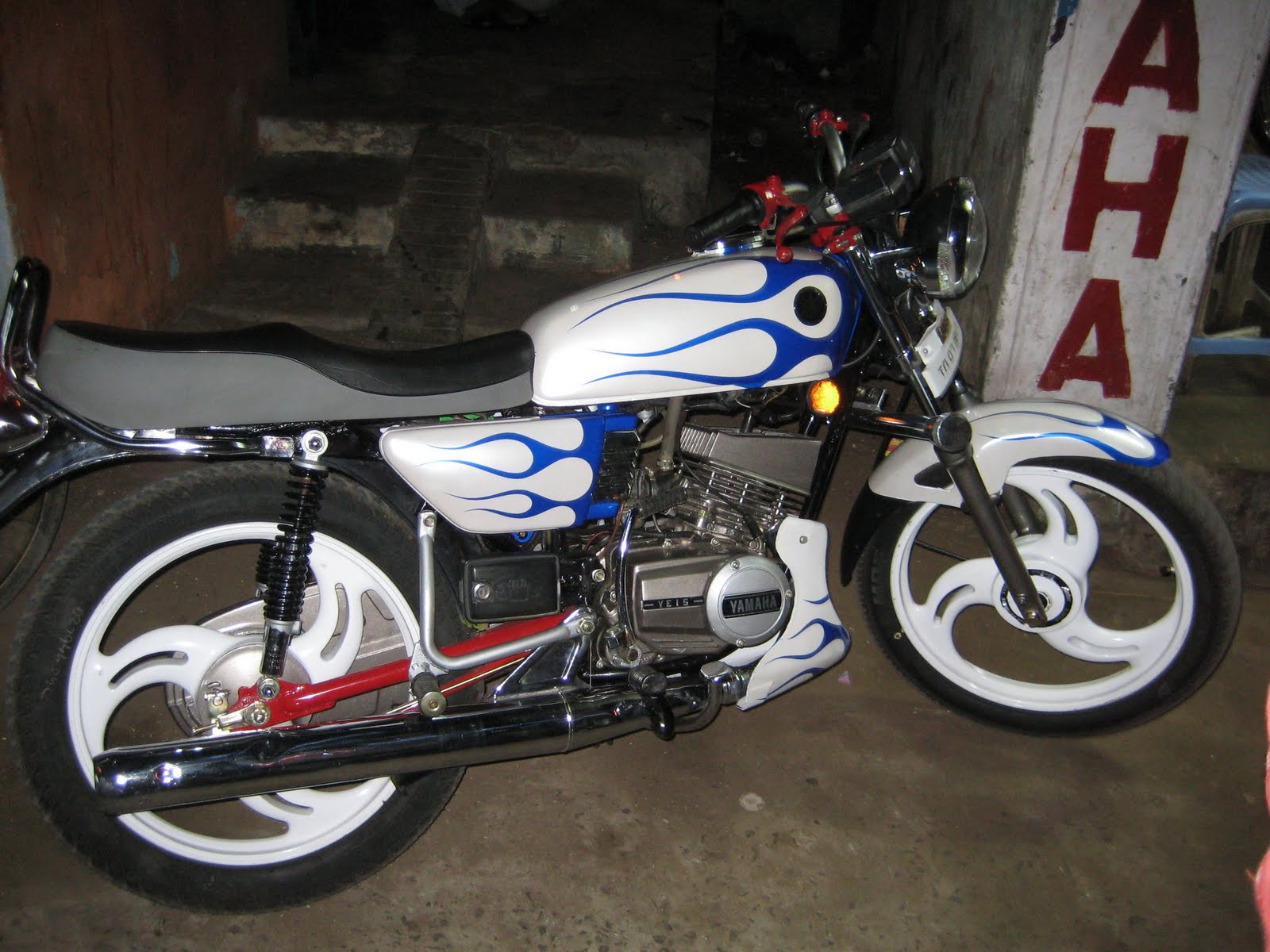
In Bangalore the Yamaha's a carriers is welded to the sissy bar added . The belly pan was a lot different than that in the pic, it looked more like that of the RXZ with a radiator cowl.

The sissy bar was chopped off just after the seat and plugged or the sissy bar entirely removed.


On the head light side, a large headlight was added with a grill.
The headlight is lifted in height by using clips.

One more commonm mod was adding a scrambler/off road bike mud gaurd, this gave the bike a bad ass look.

On the seat side, some scrapped off a little foam to make it a little slimmer, In Bangalore adding a Suzuki Samurai seat with a MaX-R 100 tail piece is a common mod.

The sissy bar of the Shogun/Samurai is welded in the place of the original.


The speedometer used on some are of the shogun and some just keep only the speedo and remove the rest.


Using the Yezdi 16inch wheel was and is a very common mod on both Yamaha and Suzuki's , it looks cool also adds good acceleration, at the expense of top speed.

Another mod I have seen in Bangalore is shaving of the fins on the head. It looks nice, and I have no information on the effect of cooling efficiency.


On the handle bars side, we used to use the Fury handle aka short handle, this was quite common and still it. Some use the shogun or the RD wide handle.
A fury Handle, No idea why it was called a fury handle.


Some neatly modded pics off the net.


